
Share this product :
Barium Chloride Dihydrate
- Origin
- : China
- CAS Number
- : 10326-27-9
- HS Code
- : 2827.39.90
Basic Info
- IUPAC Name
- : barium dichloride dihydrate
- Molecular Formula
- : BaCl2·2H2O
- Molecular Weight (g/mol)
- : 244.2600
- Synonyms & Trade Names
- : Barium chloride dihydrate; BaCl2.2H2O
- Purity / Assay (%)
- : 99% min
- Grade / Quality Level
- : Technical Grade
- Physical Form
- : Solid
- Concentration
- : Pure substance
- Appearance / Color
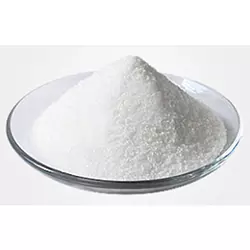
- : White to off-white solid
- Odor
- : Odorless
- Melting Point (°C)
- : 962.0000
- Density (g/cm³)
- : 3.1000
- Solubility in Water
- : Freely soluble
- Signal Word
- : Danger
- UN Number
- : 1564
- GHS Hazard Class
- : Acute toxic; Reproductive hazard
- H-Statements
- : H302|H332|H361d
- P-Statements
- : P201|P260|P270|P301+P312|P308+P313
- REACH Status
- : Registered
- Drug Precursor Status
- : Non-precursor
- Storage Class (GHS)
- : 6.1
- Storage Conditions
- : Cool, dry place; away from moisture
Categories
Share this product :
Brief Overview
Barium chloride is an inorganic compound which commonly exists in its dihydrated form, BaCl2(H2O)2. It is a hygroscopic compound and appears as white powder. It is toxic and imparts a yellow-green coloration to a flame. Due to its toxicity, it has limited use in industry and laboratory. It has a density of 3.097 g/cm3 and has a boiling point of 35.7oC. It is soluble in water and alcohol. It can also slightly dissolve in hydrochloric acid, nitric acid.
Manufacturing Process
It is prepared from barium sulfate (barite) in the industry through a two-step. The first step involves the addition of carbon to barite, to form barium sulfide (BaS) at an elevated temperature. After which, barium hydroxide or barium carbonate is added to give hydrated barium chloride.