
Share this product :
Sodium Aluminate
- Origin
- : Sweden
- CAS Number
- : 1302-42-7
- HS Code
- : 2842.9
Basic Info
- IUPAC Name
- : sodium aluminate
- Molecular Formula
- : NaAlO2
- Molecular Weight (g/mol)
- : 81.9700
- Synonyms & Trade Names
- : Sodium aluminate; Aluminate sodique; NaAlO2
- Purity / Assay (%)
- : 41% Na2O; 55% Al2O3
- Grade / Quality Level
- : Industrial Grade
- Physical Form
- : Solid
- Concentration
- : Pure substance
- Appearance / Color
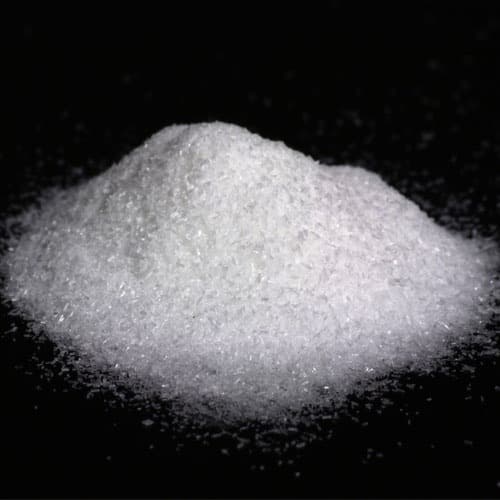
- : White to off-white solid
- Odor
- : Odorless
- Melting Point (°C)
- : 1800.0000
- Density (g/cm³)
- : 1.7300
- Solubility in Water
- : Freely soluble
- Signal Word
- : Danger
- UN Number
- : 1819
- GHS Hazard Class
- : Skin corrosive; Eye corrosive
- H-Statements
- : H290|H314
- P-Statements
- : P234|P260|P264|P270|P273|P280|P301+P330+P331
- REACH Status
- : Registered
- Drug Precursor Status
- : Non-precursor
- Storage Class (GHS)
- : 8
- Storage Conditions
- : Cool, dry; away from moisture and acids
Categories
Share this product :
Brief Overview
Sodium Aluminate has the chemical formula NaAlO2 that has several uses for industrial also technical applications. It is an inorganic chemical that is soluble in water, insoluble in alcohol, and odorless. Pure sodium aluminate is a white crystalline solid powder that is transformed into a colloidal black solution when dissolved in water. However, commercial sodium aluminate is available in solution or solid form. The benefit of using sodium aluminate is it will allow coagulation or flocculation and pH correction to take place in waters that have a naturally low pH. Sodium aluminate on certain types of water produces good results when used as a coagulant, rather than as a coagulant aid.
Manufacturing Process
Sodium aluminate can be formed by the dissolution of aluminium hydroxide in a caustic soda solution. At a near-boiling temperature, the aluminium hydroxide can be dissolved in 20 to 25% aqueous NaOH solution. When concentrated NaOH solution is used, it will lead to a semi-solid product. The aluminium hydroxide is boiled with 50% aqueous caustic soda which is carried out in steam-heated vessels of steel or nickel until it will form a pulp. When it has completely formed (a solid mass consists of 70% NaAlO2), then it shall be put into a tank and cooled. Afterward, it shall be crushed and the product dehydrated in a rotary oven. The final product compositions are 90% NaAlO2 and 1% water, together with 1% free NaOH.