
Share this product :
Sodium Hydrogen Phosphate (SHP)
- Origin
- : China
- CAS Number
- : 7558-79-4
- HS Code
- : 2835.22.00
Basic Info
- IUPAC Name
- : disodium hydrogen phosphate
- Molecular Formula
- : Na2HPO4
- Molecular Weight (g/mol)
- : 141.9600
- Synonyms & Trade Names
- : Disodium hydrogen phosphate; SHP; Sodium phosphate dibasic; E339
- Purity / Assay (%)
- : 98% min
- Physical Form
- : Solid
- Concentration
- : Pure substance
- Appearance / Color
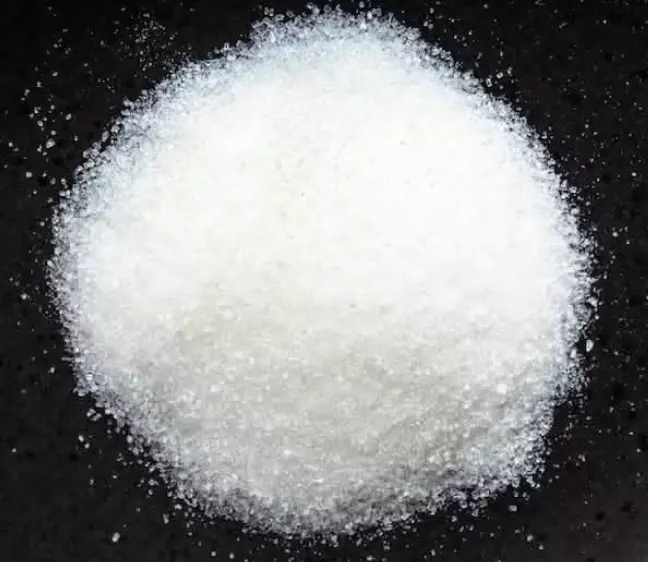
- : White to off-white solid
- Odor
- : Odorless
- Density (g/cm³)
- : 1.7000
- Solubility in Water
- : Freely soluble
- Signal Word
- : Warning
- GHS Hazard Class
- : Eye irritant
- H-Statements
- : H319
- P-Statements
- : P264|P280|P305+P351+P338
- REACH Status
- : Registered
- Drug Precursor Status
- : Non-precursor
- Storage Class (GHS)
- : 13
- Storage Conditions
- : Cool, dry place
Categories
Share this product :
Brief Overview
Sodium Hydrogen Phosphate (SHP) is one of many sodium phosphates. The anhydrous salt is hygroscopic, while the hydrates are water-soluble. Sodium phosphates are inexpensive and non-toxic. It can be directly produced by neutralizing phosphoric acid with sodium hydroxide. Industrially it is prepared in a two-step process by treating dicalcium phosphate with sodium bisulfate, which precipitates calcium sulfate. Finally, the resulting solution of monosodium phosphate is partially neutralized.
Manufacturing Process
A process for the manufacture of substantially pure disodium phosphate without utilizing organic solvents, which comprises the steps:
1. Reacting in at least two stages, at a temperature between 40° C and 100° C, monosodium sulfate with a phosphate constituent selected from the group consisting of phosphate rock, dicalcium phosphate and mixtures thereof in the presence of phosphoric acid to form a slurry containing phosphoric acid, monosodium phosphate and calcium sulfate and separating the formed calcium sulfate to obtain a filtrate containing phosphoric acid and monosodium phosphate, the amount of phosphoric acid being in the range of between 5% and 20% of the total P2O5, the slurry being characterized by the absence of monocalcium phosphate,
2. Neutralizing in two stages, the filtrate obtained in step 1 first with a calcium constituent selected from calcium carbonate, calcium hydroxide and mixtures thereof, at a pH in the range of between 4 and 6.5 to obtain a slurry containing dicalcium phosphate and separating the formed dicalcium phosphate, followed by further neutralizing with an alkali sodium constituent selected from sodium hydroxide, sodium carbonate and sodium bicarbonate or mixtures thereof at a pH in the range of 8.0 to 9.5.
3. Crystallizing out from the filtrate formed in step 2 substantially pure hydrated disodium phosphate.